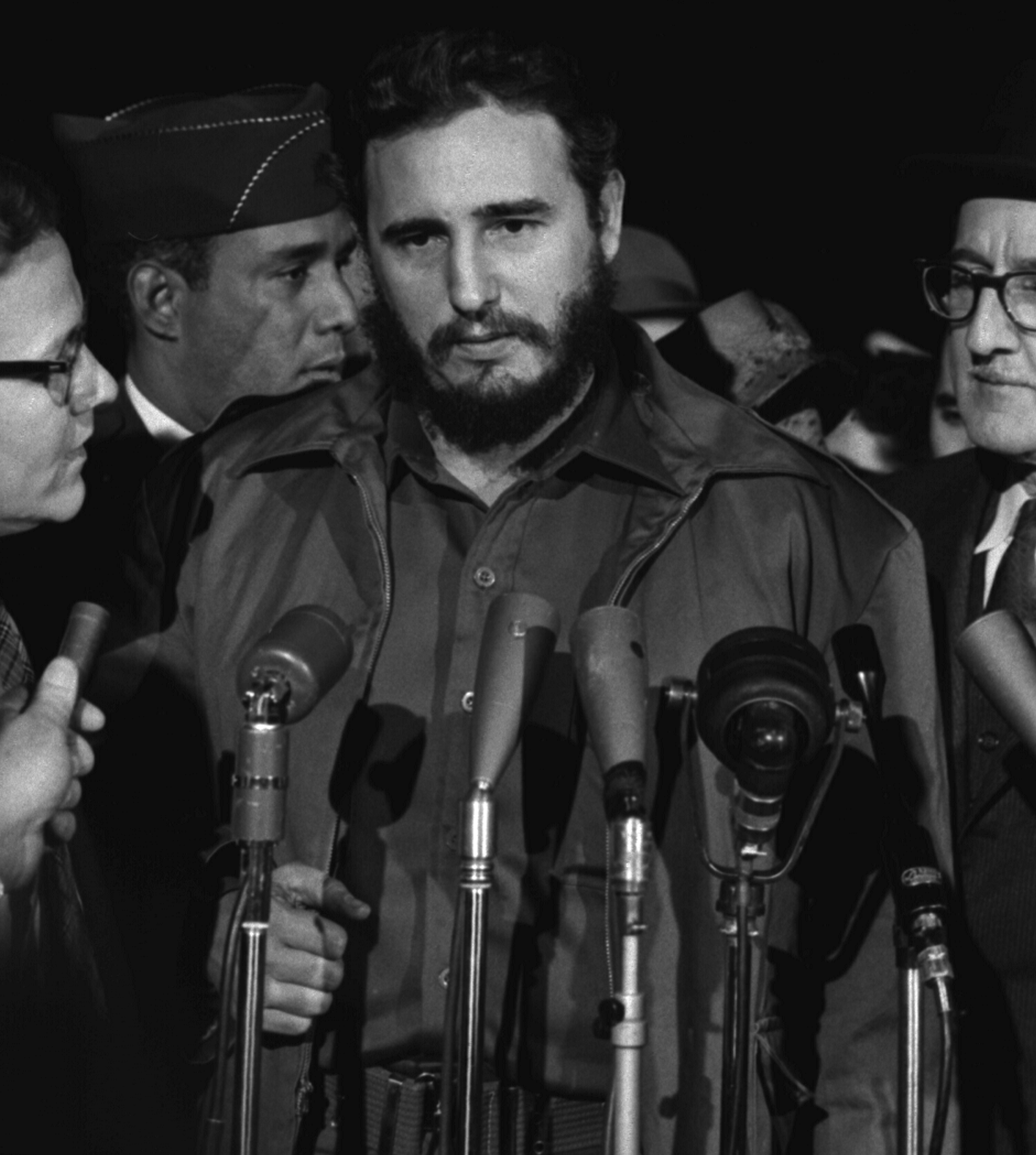
“Fidel” by Eduardo Galeano
By renowned author and historian Eduardo Galeano, from his book, Mirrors: An Almost Universal Story.
His enemies say he was a king without a crown and that he confused unity for unanimity.
And in this his enemies are right.
His enemies say that if Napoleon had had a newspaper like the “Granma” no Frenchman would ever have heard of the disaster at Waterloo.
And in this his enemies are right.
His enemies say that he exercised power talking much and listening little, because he was more accustomed to echoes than to voices.
And in this his enemies are right.
But his enemies don’t say that it wasn’t to pose for History that he stood up to gunfire when the invasion came. That he faced storms unmoved, storm after storm. That he survived six hundred and thirty-seven attempts on his life. That his contagious energy was decisive in converting a colony into a nation. And that is wasn’t by some Mandinga’s curse nor by a miracle from God that that new nation could survive ten presidents of the United States, who had crossed napkins over their laps to eat it for lunch with a fork and knife.
And his enemies don’t say that Cuba is an odd country that doesn’t compete in the World Cup of Doormats.
And they don’t say that this revolution, which grew up always punished, amounted to what it could under the circumstances, instead of to what it wanted. Nor do they say the size of the wall between desire and reality got bigger and thicker in large part thanks to the imperial blockade that strangled the development of Cuban-style democracy, obligated the militarization of its society, and delivered to the bureaucracy, which for every solution has a problem, all the alibis it needed to justify and perpetuate itself.
And they don’t say that despite all its regrets, despite the aggressions from abroad and the internal injustices, this long-suffering but doggedly happy island has generated the least unjust Latin American society.
And his enemies do not say that this achievement was the fruit of the sacrifice of its people, but also the fruit of the stubborn will and antiquated sense of honor of this nobleman who always battled for the least among us, like his famous colleague of Spanish windmills.