×

COPINH: Defensa de la Tierra Lenca

COPINH: Defensa de la Tierra Lenca

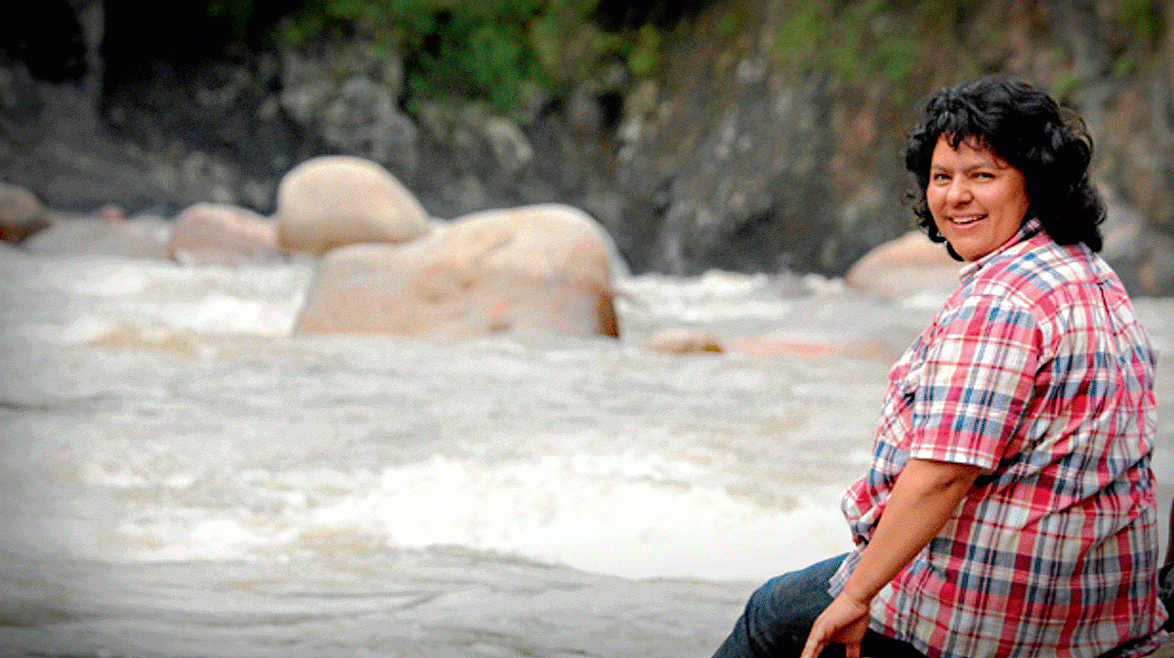
Foto de portada: Berta Cáceres. Foto por: Prachatai via Flickr

Por Nicole Tse

Tras las recientes tragedias en Honduras, la mayoría de la gente ha escuchado sobre COPINH, en los medios o de otras fuentes. El Consejo Cívico de Organizaciones Populares e Indígenas en Honduras ha atravesado las fronteras de su país y se ha vuelto relevante en todas partes de Latinoamérica donde los activistas enfrentan riesgos semejantes por su trabajo.

Con base en el suroeste de Honduras, el COPINH se compone de más de 200 comunidades indígenas Lencas en los departamentos de Intibucá, Lempira, La Paz y Santa Bárbara. El propósito de la organización es mejorar la calidad de vida de la gente indígena. Por ejemplo, intenta fortalecer las comunidades indígenas en Honduras, impulsando el reconocimiento de sus derechos políticos, sociales, económicos y culturales.

El COPINH se fundó en 1993 por un grupo que incluyó a la difunta Berta Cáceres. En el departamento de Intibucá, la nueva organización se enfrentó a la tala de árboles y se involucró en otras luchas populares. La causa de muchas de estas luchas fue y es la presencia de empresas multinacionales en Centroamérica, con el fin de explotar sus recursos naturales: la tierra, el agua y otros.

Su trabajo principal se centra en proteger a las comunidades indígenas, su estilo de vida y medioambiente de la destrucción por proyectos industriales, como la tala de árboles y la construcción de presas hidroeléctricas. En 1994, la organización movilizó a cientos de personas indígenas que presionaron al gobierno hondureño para que ratificara el Convenio 169 de la Organización Internacional del Trabajo sobre pueblos indígenas y tribales. Esto lo hicieron juntándose frente al Congreso, donde no se movieron hasta lograr su meta. Este convenio, que también se conoce como la Convención 169 de la OIT, requiere que el gobierno consulte a las comunidades indígenas antes de implementar proyectos que les afecten de manera directa.

Otro método que el COPINH utiliza para alcanzar su meta es obtener títulos de propiedad sobre las tierras comunitarias indígenas. Así, aprovechando del sistema legal, las comunidades pueden asegurarse de que sus territorios y recursos naturales no sean explotados por extranjeros. Asimismo, ha ayudado a establecer zonas protegidas donde la tala de árboles está prohibida. Dentro de las comunidades indígenas, el COPINH toma gran parte en la creación y la financiación de centros de salud y de educación.

Además de defender los derechos indígenas en general, el COPINH también se enfoca en los derechos de la mujer. Quiere mejorar las capacidades de las mujeres en liderazgo en las comunidades y organizaciones Lencas, así como combatir los obstáculos que enfrentan todas las mujeres de Honduras, especialmente los que surgen del concepto del machismo. Esto se hace parcialmente por medio de la emisora de radio La Voz Lenca, que analiza asuntos sociales, económicos y culturales desde una perspectiva feminista. También sirve como plataforma para que se discutan los asuntos de la mujer a través de las voces de las mismas mujeres.

En cuanto al medioambiente, uno de los problemas más grandes contra los que el COPINH lucha es la construcción de las presas hidroeléctricas. Más de 300 presas nuevas están planificadas en el país, 49 de ellas sobre tierras que pertenecen a los miembros Lencas del COPINH. Estos contratos para la construcción de presas, así como proyectos de la minería, de la tala de árboles y de otros tipos, infringen la Convención 169 de la OIT que ya mencionamos—es decir, el gobierno hondureño no adquirió el consentimiento de los pueblos indígenas en cuyos territorios están ubicados esos proyectos.

Unas de las maniobras más recientes del COPINH tienen que ver con el Proyecto Hidroeléctrico DESA-Agua Zarca. En 2013, la organización empezó a protestar por la construcción de la presa sobre el Río Gualcarque, un cuerpo de agua en la región de Río Blanco que no solo tiene importancia cultural y espiritual para el pueblo Lenca, sino que también sustenta ecosistemas diversos, la producción agrícola y la flora medicinal local. Aunque los esfuerzos del COPINH forzaron a algunos de los inversores del proyecto a dejarlo, la construcción—y el apoyo de partidarios como el banco de desarrollo holandés FMO, las empresas alemanas Siemens y Voith Hydro, e incluso el gobierno estadounidense—continuó.
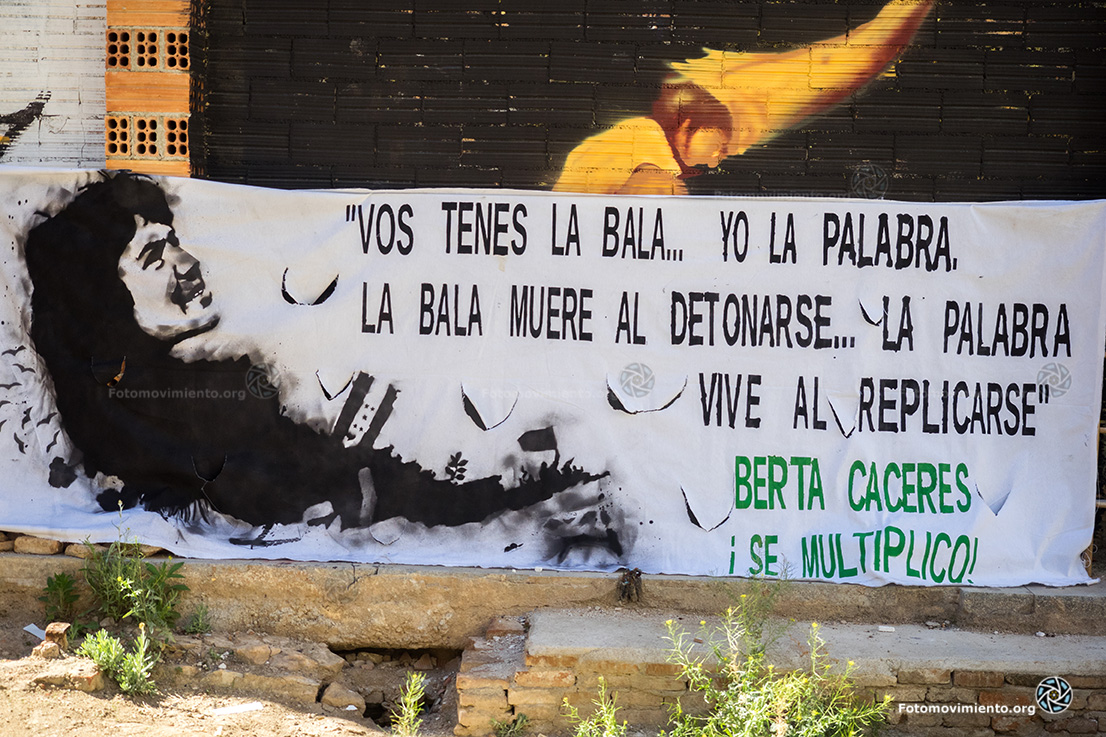
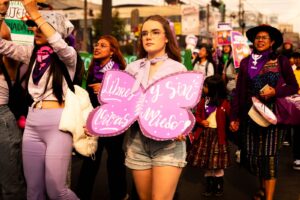
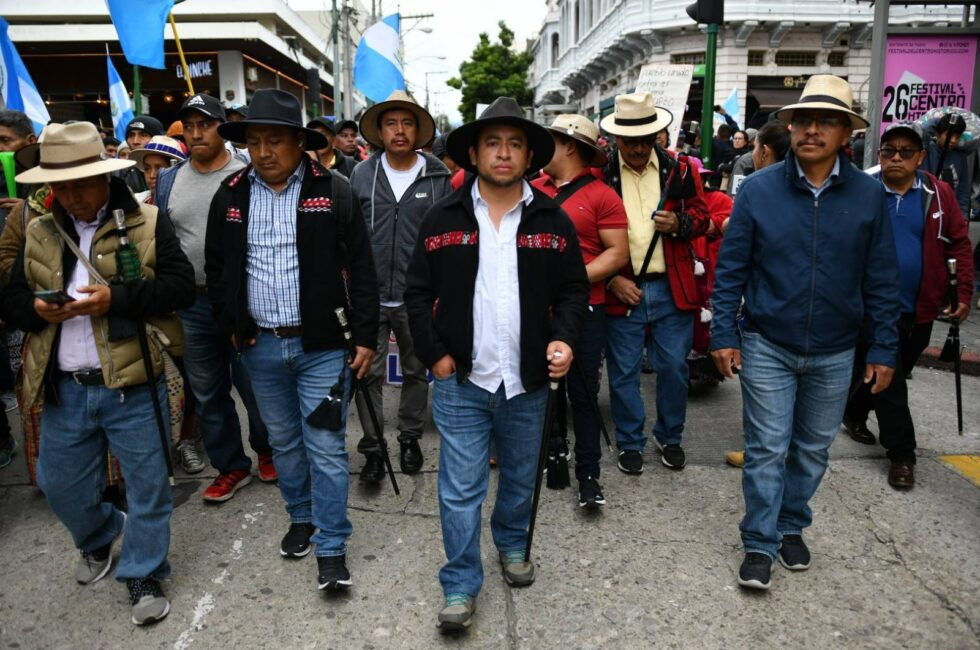
Foto por: fotomovimiento.org

En 2015, los miembros del COPINH organizaron una protesta pacífica en frente del ayuntamiento de San Francisco de Ojuera. Sin embargo, el paso de los autobuses fue impedido por zanjas nuevas que rompían las calles; también los manifestantes fueron atacados con insultos y con armas. Hoy en día, el COPINH continúa su lucha contra el proyecto Agua Zarca, con el argumento de que incluso las plantas no ubicadas en tierra Lenca son problemas suyos porque tienen un impacto negativo sobre el Río Gualcarque, que sí corre por las tierras Lencas.

Justo antes del asesinato trágico de Berta Cáceres, el COPINH llevó a cabo un Foro sobre energías alternativas desde la visión indígena. Este foro se centró en rechazar e ir más allá de “la lógica consumista, privatizadora y depredadora de la vida.” Pretendía provocar un debate sobre la energía alternativa, la soberanía ambiental y los derechos indígenas. Al final, el COPINH quería que el diálogo facilitado por el foro tuviera como resultado la creación de una propuesta para la energía alternativa, ecológica y humana con base en la perspectiva Lenca.

Desafortunadamente, las repercusiones tristes de este evento tan lleno de esperanza no son algo nuevo para los activistas de Honduras. Es muy probable que el asesinato de Tomas García en 2013, los asesinatos más recientes de Berta Cáceres y Nelson García y los arrestos previos de Cáceres y sus compañeros Aureliano Molina y Tomas Gómez se realizaran por orden del gobierno hondureño. Como el gobierno cuenta con el apoyo de las grandes empresas que se beneficiarían de la derrota del COPINH y de la explotación de recursos indígenas, el COPINH se está poniendo en contacto con grupos como la Frente Nacional de Resistencia Popular (FNRP) para criticar y oponerse a la corrupción y las políticas injustas del régimen actual.
COPINH: Defending Lenca Lands

Cover Photo: Berta Cáceres. Photo: Prachatai via Flickr

By Nicole Tse

In the wake of the recent tragedies in Honduras, most people have heard of COPINH either through the media or from other sources. The Civic Council of Popular and Indigenous Organizations of Honduras (Consejo Cívico de Organizaciones Populares e Indígenas en Honduras in Spanish) has traversed the borders of its country and become relevant in all parts of Latin America where activists face similar risks because of their work.

Based in the southwest of Honduras, COPINH is made up of 200 indigenous Lenca communities in the departments of Intibucá, Lempira, La Paz, and Santa Bárbara. The organization’s purpose is to improve the quality of life for indigenous people. For example, it actively works to strengthen indigenous communities in Honduras, pushing for recognition of their political, social, economic, and cultural rights.

COPINH was founded in 1993 by a group that included the late Berta Cáceres. In the department of Intibucá, the new organization fought against logging and involved itself in many other popular struggles. Many of these struggles were and continue to be caused by the presence of multinational corporations in Central America for the purpose of exploiting its natural resources: the land, the water, and so on.

Its main work centers around protecting the indigenous communities, their way of life, and the environment from destruction through industrial projects such as logging and the construction of dams. In 1994, the organization mobilized hundreds of indigenous people to pressure the Honduran government into ratifying the Indigenous and Tribal Peoples Convention (1989) by gathering outside of Congress and refusing to move. This Convention, also known as International Labour Organization Convention 169, requires the government to consult indigenous communities before implementing projects that directly affect them. Another way that COPINH pursues its goal is by obtaining titles for indigenous communal lands. This allows the communities to use the legal system to keep their territory and natural resources from being exploited by outsiders. Additionally, it has helped to create protected zones where logging is prohibited. Within the indigenous communities themselves, COPINH plays a large part in the creation and funding of health and educational centers.

In addition to defending indigenous rights in general, COPINH also focuses on women’s rights. It works to both uplift women in positions of leadership in Lenca communities and organizations as well as to combat the obstacles that all women in Honduras face, especially the ones that arise from the concept of machismo. Some of this is done through the Voice of the Lenca radio station, which analyzes social, economic, and cultural issues through a feminist lens; it also serves as a platform for discussion about women’s issues in the voices of those very women. With regard to the environment, one of the biggest challenges that COPINH pits itself against is the building of hydroelectric dams. More than 300 new dams are planned in the entire country, with 49 of those on land that belong to the Lenca members of COPINH. These dam-building contracts, along with mining, logging, and other types of projects, are all in violation of the aforementioned ILO Convention 169—that is, the Honduran government did not receive the consent of the indigenous peoples in whose territories those projects will take place.

Some of COPINH’s most recent maneuvers involve the DESA Agua Zarca Hydroelectric Project. In 2013, the organization began protesting construction of the dam on the Gualcarque River, a body of water in the Río Blanco region that is not only culturally and spiritually significant to the Lenca people, but also supports diverse ecosystems, agricultural production, and medicinal flora in the area. While COPINH’s efforts were enough to cause several of the project’s investors to pull out of the country, construction—and support from partners such as the Dutch development bank FMO, the German companies Siemens and Voith Hydro, and even the United States government—continued.  In 2015, organization members planned a peaceful protest in front of the San Francisco de Ojuera City Hall. However, their transportation was stopped by newly dug ditches in the roads; they were also greeted with insults and armed attacks. Today COPINH continues its fight against the Agua Zarca project, arguing that even the plants that are not located on Lenca land are its concern due to their negative effect on the Gualcarque River, which does indeed flow through Lenca lands.

Photo by: fotomovimiento.org

Just before the tragic assassination of Berta Cáceres, COPINH held a Forum on Alternative Energies from an Indigenous Viewpoint (Foro sobre energías alternativas desde la visión indígena in Spanish). This forum was centered around rejecting and overcoming “consumerist, privatizing, and predatory logic.” Instead, the aim was to provoke a debate about alternative energy, environmental sovereignty, and indigenous rights. Ultimately, COPINH hoped that the dialogue facilitated by the forum would result in the creation of a proposal for ecological and humane alternative energy based on the Lenca perspective.

Unfortunately, the heartbreaking aftermath of this hopeful event is nothing new to the activist community in Honduras. It is very likely that the 2013 murder of Tomas García, another one of COPINH’s leaders, the more recent murders of Berta Cáceres and Nelson García, and the earlier arrests of Cáceres and fellow members Aureliano Molina and Tomas Gómez were all carried out on the orders of the Honduran government. With the government backed by large companies that stand to benefit from COPINH’s defeat and the exploitation of indigenous resources, COPINH is reaching out to groups such as the nonviolent National Front for Popular Resistance (Frente Nacional de Resistencia Popular or FNRP in Spanish) in order to criticize and oppose the corruption and unjust policies of the current regime.

COPINH has also demanded that the Inter-American Commission on Human Rights support a thorough investigation of the two recent murders, to prevent Honduran authorities from protecting the guilty parties. Because if the current impunity continues and COPINH ceases its work? Greedy corporations will exploit the land with no thought for its people, and the consequence will be destruction.