Donating is not a negotiation
By Lisseth Santos / Translated by Maya Greenberg
According to what is known about donation, this refers to a voluntary way of giving without receiving anything in return. However, the capitalist economic model, in its neoliberal phase, has turned health into a business and, with it, has also motivated profit in situations where it is necessary to provide blood to another person who requires it for health reasons. Moreover, it should not be precisely the type of blood, since there is the possibility that in the blood bank the corresponding change can be made.
It is necessary to point out that in Guatemala there is a lack of a culture of donation as such, since in most cases it has become a business. In this way, a dehumanization is experienced, since blood is life and life is not for sale. However, the aforementioned economic model is so internalized that it has blinded solidarity between people.
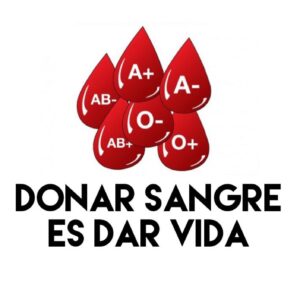
It is essential to dig in our trunk of memories to find a personal, family or friendship situation in which a blood donation was needed, and identify if it was really a “donation” or if, on the contrary, it was a situation of economic negotiation to obtain the necessary blood to attend a certain health situation.
It is important that you ask yourself the following question: Have I ever donated blood without remuneration? Based on your answer, I invite you to reflect on the following: How did you feel when you donated blood voluntarily and without remuneration? How do you feel now when you recognize that you sold your blood? Do you believe that a culture of blood donation without profit should be encouraged? What can you do about it? And finally, answer honestly: Why have you never donated blood?
The provocative questions allow us to broaden the framework of analysis of the current situation of blood donation. According to the World Health Organization (WHO), “voluntary, unpaid blood donation is crucial to ensure a safe and sustainable supply of blood and blood products. Blood donation is an altruistic act that saves lives and contributes to public health”.
The Hospital Regional de Occidente (HRO) promotes messages of reflection on the importance of coordinating efforts in an inter-institutional manner. The Ministry of Education and the Ministry of Public Health and Social Assistance can develop communication and information campaigns aimed at the student population, with the objective of raising awareness about the importance of donating blood on a voluntary and non-profit basis. In this way, when students reach the age of majority and meet the requirements, they will be able to contribute to the supply of the different blood banks.
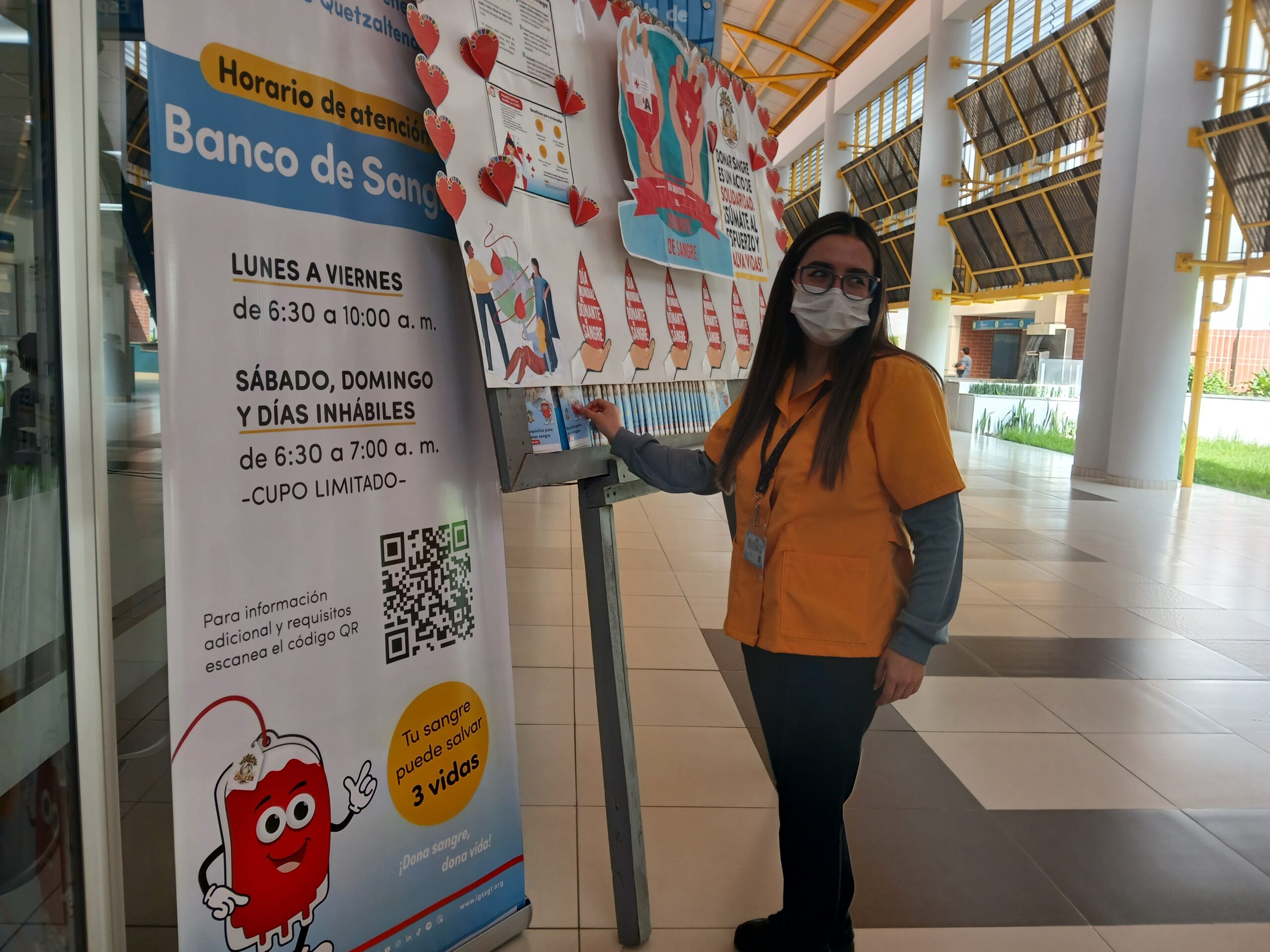
Dr. Ligia Reyes, head of the blood bank of the Guatemalan Institute of Social Security (IGSS), explained “that donating blood does not fatten or weaken, and doing so stimulates the bone marrow to produce more blood and blood cells”. He also indicated that “the requirements to donate are to be in good health, have a minimum weight of 115 pounds and be between the ages of 18 to 58 years old”.
According to the information provided by the International Cancer Center -COL-, your body will immediately begin to replenish the amount of blood lost, being important to know that most donors do not feel discomfort after donating. However, some donors may experience mild dizziness, lightheadedness, fatigue, bruising, bleeding or pain. However, these symptoms usually disappear quickly. After donating, and while you are in the recovery area, it is important to rest, eat a light meal and drink fluids.
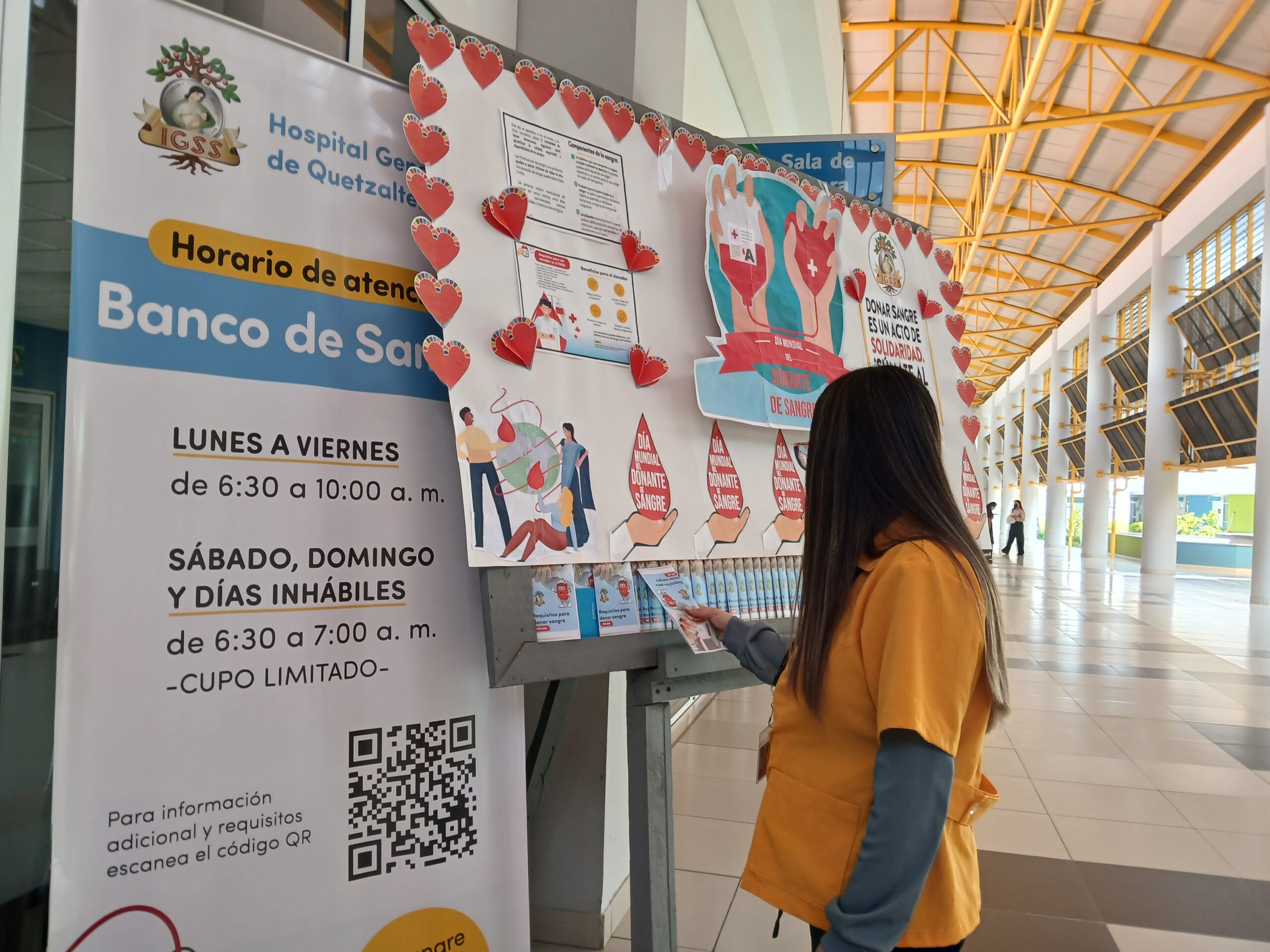
Respectable reader, this document was written with the intention of reflecting on personal and family practices related to blood donation. Remember, donating is not negotiating, it is an act of solidarity and generosity.
I share the following poem for reflection:
Surviving humanity
The indifference dressed in the garb of profit swings,
on the path of unconsciousness that is submerged
in the swamp of human fatigue.
The perverse thirst that lives in the submissive house
of profit, where the dark
and perverse heart of the world rests, drowns humanity in misery.
The embrace of necessity strangles the will
of those who also donate, but dress for profit out of necessity.
May the rotten mist of the neoliberal model,
not suffocate the fragility of humanity in banality,
in which the schizophrenic superfluous rests.
Lisseth Santos, a woman committed to social transformation for a better world for all. Social Worker, with studies in social anthropology, graduated from Centro Universitario de Occidente.